Car wrap or paint: which works better and when
They are not competing options in every case: sometimes vinyl is the only sensible choice, and sometimes no film will do. The dividing line is the condition of the bodywork.
Reviewed by Sergio6 min read
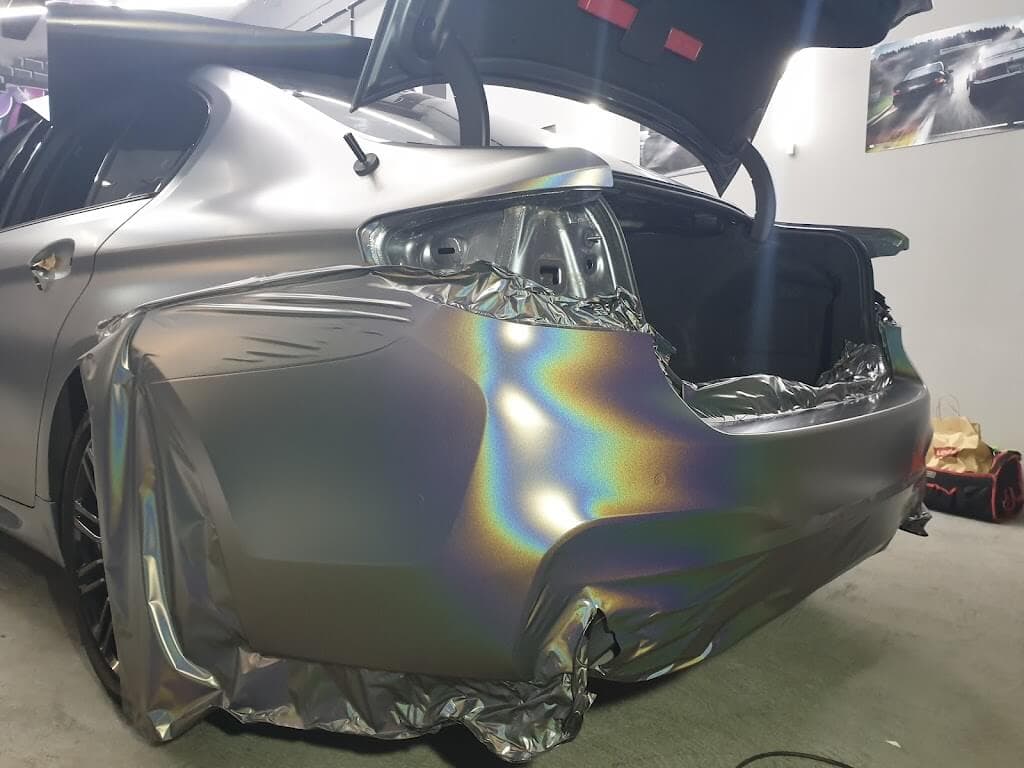
They are not the same job
Painting changes the car permanently: the surface is sanded, new colour and clear coat are applied, and what was underneath cannot be restored. Wrapping adds a layer over healthy paint and leaves it intact for as long as the film stays on.
It is worth saying this at the start: we do not do bodywork or paint. If our inspection shows that the car needs a bodyshop, we tell you and that work has to be sorted first. We would rather lose a job than fit film over a surface that will not hold it.
When the car needs paint
In these cases, wrapping over the top is not a cheaper alternative. It only postpones the problem and adds another one: when the film comes off, poorly bonded areas can come away with it.
- The bodywork is damaged: dents, knocked edges or distorted panels.
- There is rust or lifting paint, which would keep spreading under film.
- The clear coat is flaking or there is poorly bonded respray.
- A scratch catches your fingernail: it has gone through the clear coat and is not a job for vinyl.
- You need to repair that panel for another reason anyway.
When wrapping makes more sense
- You want a different look without giving up the option of returning to the original.
- You want a finish that does not exist in paint or is impractical to paint: colour-shift, carbon, chrome or textures.
- You want to protect the factory clear coat from the sun and light scuffs while you use the car.
- The car is on renting or leasing and has to go back as it came.
- You only want to change one area: roof, bonnet, trim or chrome.
- You plan to change the colour again in a few years.
What vinyl cannot do
This is the part people mention least and the one that prevents most disappointment. Vinyl does not hide; it follows. A dent stays visible, a particle under the adhesive leaves a raised point and an uneven surface still shows under raking light even when the colour changes.
Nor can it be polished. On paint, a surface mark can be machine-corrected; on vinyl, the answer is to replace that piece. And it will not bond to just any surface: it needs healthy, clean and degreased clear coat, especially at the edges.
Reversibility and the car's value
Under quality film, the clear coat comes back better preserved than on other cars of the same age: it has been shielded from the sun and light scuffs all that time. That is exactly what holds a car's value when you sell it or hand it back.
A respray, on the other hand, stays in the car's history. If it is done well it need not reduce the value, but doubtful-quality work shows and weighs on the negotiation. Vinyl lets you return to the starting point; paint does not.
Lifespan: the honest comparison
A properly done paint job lasts much longer than vinyl. Film sits in the three-to-five-year range depending on exposure and maintenance, after which it needs to be removed or renewed.
The difference is that this end point is expected. Aged paint has to be repainted; aged vinyl comes off to reveal the same car underneath. It is more a difference in purpose than quality: one is permanent and the other is designed not to be.
The right order when there is damage
First repair and paint whatever needs it, then wrap or protect it. If a panel has just been painted, tell us: fresh paint needs time before it can take vinyl or film, and the area should be checked before it is sealed.
As for price, every case is different and depends on the size of the car, the finish and how much has to come apart. The factors are explained service by service on the prices page and in our guide to car wrap costs.
FAQ
Can you wrap a resprayed panel?
Sometimes yes, sometimes no. It depends on how the respray was done and how well it has bonded. We inspect it under light and with a paint thickness gauge before accepting the job, and put any risk in writing.
Does vinyl hide a scratch?
A very fine one within the clear coat may stop showing. A deep one will not: the film follows the profile and it still appears under raking light. If it catches your fingernail, it needs paintwork.
Can I change the colour every few years?
Yes, and it is one reason people choose vinyl. Each change involves removing the previous film and preparing the surface again, and that work is quoted separately.
What if I want to go back to the original colour?
The film is removed with heat and any adhesive residue is cleaned away. Over healthy paint, the original colour comes back as it was and is usually in better condition than the rest of the bodywork.
Does a complete colour change have to be declared?
It is worth checking the specific case and the vehicle documents before doing it. Tell us your situation when asking for a quote and we will go through it with you before booking a date.