Full or partial wrap: how to decide
It is not only a question of budget. It changes how the car looks, how long it sits in the workshop and what happens the day you decide to remove it.
Reviewed by Sergio5 min read
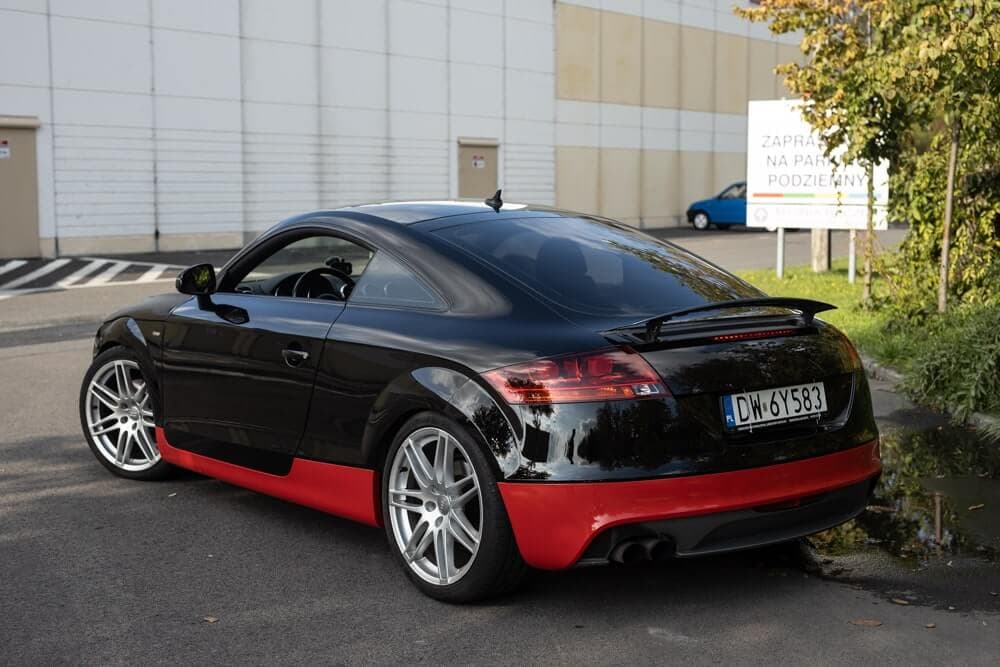
What each one means
A full wrap covers every visible exterior panel and changes the colour of the car completely. A partial wrap works on specific parts — roof, bonnet, mirrors, trim, diffuser — without touching the rest of the bodywork.
The line is not always obvious: a car with the roof, bonnet and mirrors in gloss black is still a partial wrap, however big the visual change looks.
When a full wrap makes sense
A full wrap includes removing parts and wrapping the edges from the inside on every panel, which is why the car stays several days at the workshop. It is also where the difference between careful work and quick work shows most.
- You want a different colour, not a detail: it is the only way the result reads as a car of that colour.
- You do not like the original colour and you do not want to repaint.
- You are keeping the car for several years and want to protect the factory clear coat meanwhile.
- The car is dark and you want to take it light: in partial the contrast with the rest would be too abrupt.
When a partial wrap makes sense
Many parts are done within the day, so the car is barely off the road. It is the usual way in: half the people who end up with a full wrap started with a roof.
- You want contrast, not change: a black roof over a light body is the classic.
- You are after one specific sporty detail: carbon on mirrors, diffuser or trim.
- You want to try a finish before committing the whole car to it.
- You need to cover one area with light marks without going through paint.
- The budget does not stretch to a full wrap right now, but you want a visible change.
What changes in the result
- Uniformity
- On a full wrap the whole car ages together. On a partial one the film and the original paint move apart, and over the years the contrast can grow.
- Hidden areas
- A full wrap done properly also dresses the door frames and inner edges. Open the door and you see the new colour, not the old one.
- Workshop time
- A partial job is usually done in a day or two. A full wrap needs several days of bay time, depending on size and how much comes off.
- Removal
- In both cases the film comes off without damaging healthy paint. On a partial wrap the covered area usually comes out better preserved than the rest of the body.
The most common mistake
Choosing partial while thinking "the rest later". If a full colour change is where you are heading, doing it in stages costs more: preparation and disassembly get repeated, and above all there can be a batch difference between today’s film and the one you buy in a year. On plain light colours that difference shows.
If the plan is to reach a full wrap, tell us at the start: we can hold material from the same batch or simply plan the whole job now.
FAQ
Does a colour change have to be declared on the vehicle papers?
In Spain it is worth checking the specific case and the vehicle documentation before a full colour change. We point you to your situation before the work starts.
Can I mix different finishes on the same car?
Yes, and it is one of the most requested combinations: satin body with carbon details, or a gloss roof over a matte colour. We show you the samples side by side before you decide.
Does a partial wrap protect the paint underneath?
It does. The film absorbs light rubs and slows down UV, so the paint under it is usually better preserved than the rest of the car.
How long does each one take?
A partial job is often finished within the day. A full wrap normally needs several working days, depending on the size of the car and how much is taken apart.