PPF or ceramic coating: which one your car needs
It is the most common question in the workshop, and the two do not compete: one protects against impacts, the other against maintenance. Here is the comparison we make with the car in front of us.
Reviewed by Sergio6 min read
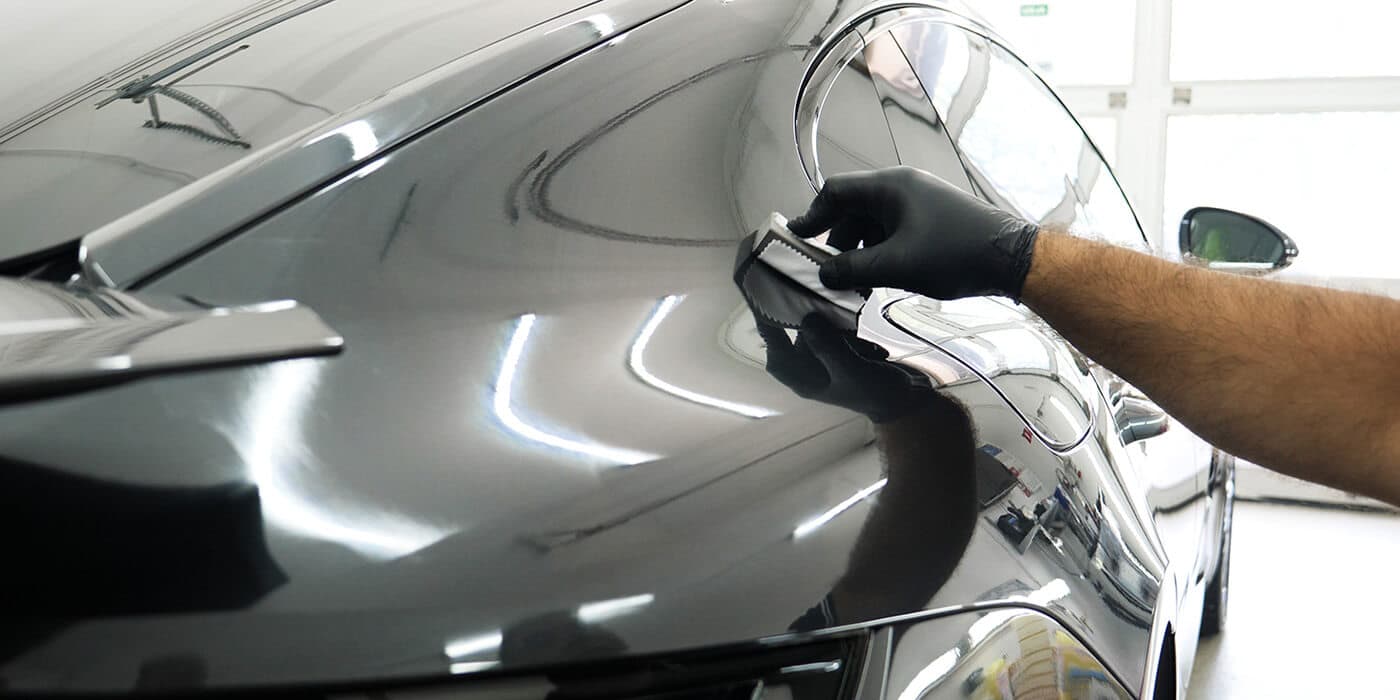
The difference in one sentence
PPF is a physical polyurethane film laid over the paint that absorbs impacts. Ceramic coating is a chemical layer that bonds to the clear coat and changes how the surface behaves: it repels water and dirt, holds the gloss and makes washing easier.
PPF helps reduce marks from small impacts on covered areas; it cannot prevent every kind of damage. Ceramic coating does not replace that physical barrier, but makes cleaning easier.
What PPF solves
Front coverage places film on areas exposed to road debris. It does not cover damage to doors, sides, roof or rear; the choice depends on how the car is used.
- Gravel strikes on the front end, bonnet and wings, which is where paint actually gets chipped.
- Rub marks on handles, sills and door edges.
- Micro-scratches, which on many films self-heal with the warmth of the sun.
- Insect marks and organic residue that attack the clear coat if left on it.
What ceramic solves
What it does not do: stop a stone. No ceramic coating is thick enough for that, however often the word "armour" appears in the advertising.
- Water runs off more easily, but can leave mineral marks as it dries: dry the car after washing.
- Dirt sticks less and a wash goes from an hour to a short job.
- The gloss stays stable without waxing every few weeks.
- It protects against UV and organic residue if that is removed in time.
- It reduces wash micro-scratches because the surface is harder and more slippery.
Which to choose for your case
- You do a lot of motorway miles
- Front PPF if you want to cover panels exposed to road debris: bumper, bonnet, wings and headlights. The share of damage depends on routes and use.
- A new car you want to keep immaculate
- Combine front PPF with ceramic elsewhere if you want a physical layer at the front and easier cleaning on other areas. The quote defines coverage for each material.
- City car, daily use, parked on the street
- Ceramic. The problem here is not stones, it is dust, sun and how much work it takes to keep the car presentable.
- A sports car or a high-value car
- Consider full-body PPF if you want coverage beyond the front, and a compatible ceramic coating for easier washing. It does not guarantee undamaged paint or resale value.
- A wrapped car
- Ceramic compatible with the finish. On matte and satin it stops the film from getting dirty unevenly.
They combine, they do not exclude each other
Ceramic goes over PPF without any problem, and it is the sensible thing to do: film also collects dirt and also benefits from water running off. That way the car washes just as easily on the panels with film and without.
What makes no sense is swapping one for the other and expecting the same result. If somebody offers you ceramic "instead of" PPF because it protects against stones just the same, they are selling you something else.
What both need first
Film and coating are both transparent, so everything underneath shows and stays there. If the clear coat arrives with swirls from the brush wash, sealing it means locking them in for years.
That is why the job starts the same way in both cases: technical wash, decontamination and paint correction according to the actual condition. On a freshly registered car that part is short; on an older one it is most of the quote.
Paint correction beforehand →PPF packages →Ceramic coating →
FAQ
Does ceramic protect against scratches?
It should not be treated as a barrier against scratches or impacts. It helps washing, but products and technique still matter. PPF provides a physical layer on covered areas without guaranteeing protection against every impact or cut.
Can I put ceramic over PPF?
Yes, and it is the usual thing. Film gets dirty too, and ceramic on top makes it clean as easily as the rest of the bodywork.
Is PPF visible on the bodywork?
With careful fitting, very little. On large panels the edges are tucked away and the car keeps its original look.
Which lasts longer?
It depends on the selected products, exposure and maintenance; there is no single duration to compare. Material instructions and terms are reviewed before the work, separately from the installation warranty.
Which one is cheaper?
Ceramic, generally, because there is no laminated material to cover with and nothing to take apart. Full-body PPF is the most expensive of the two, and the partial Front is the most contained.