Ceramic coating over PPF and vinyl: when it makes sense
Applying ceramic to paint and applying it over film are not the same job. What it adds changes, the product changes and so does the right time to apply it.
Reviewed by Sergio5 min read
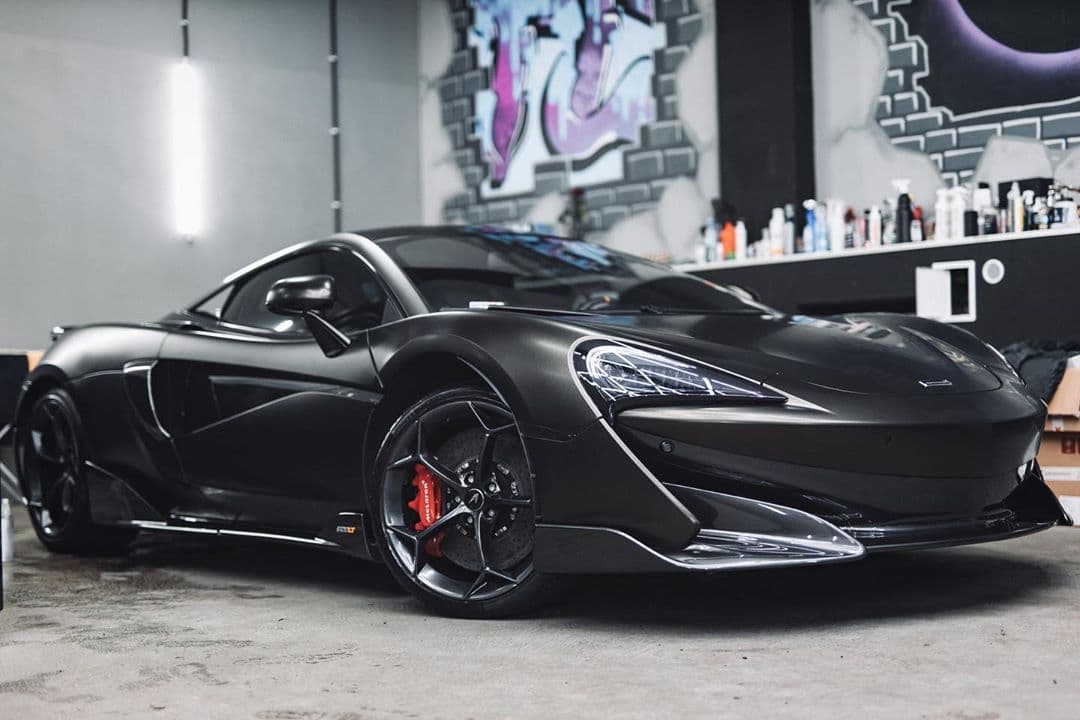
What changes when there is no clear coat underneath
On paint, ceramic works against a hard clear coat already sealed at the factory. On protection film or vinyl, the surface underneath is polyurethane or PVC with its own outer layer, which is softer and has different surface tension.
In practical terms, ceramic still does what it does best — water runs off, dirt sticks less and washing takes less time — but it adds no impact protection and does not stop the solar radiation that ages the film. It is a maintenance layer, not armour.
Over PPF
This is the most natural pairing of the two. Clear film gets dirty too, and insect remains and road grime stick to its surface just as they do to the paint beside it. With ceramic on top, the entire car washes equally easily and no areas take more work than others.
The film's heat-activated self-healing still works: ceramic is an extremely thin layer and does not stop micro-scratches closing. What should be checked first are the edges, because sealing an edge that is already lifting does not repair it; it only hides it.
Over gloss vinyl
Here, the effect is closest to ceramic over paint. Gloss vinyl has a closed surface, ceramic bonds well and the car gains the same hydrophobic behaviour as clear coat.
It is particularly useful on dark colours and cars parked on the street, where dust shows within hours and washing becomes a weekly job.
Over matte and satin: the delicate point
This is the one decision that needs care. A product designed to add depth and gloss to clear coat does exactly that on matte vinyl, and the result cannot be corrected: the area stays satin permanently and vinyl cannot be polished.
With a product compatible with matte finishes, however, ceramic is the best treatment for this type of film. Matte gets dirty unevenly and shows grease around handles and the tailgate; once the surface is sealed, that dirt comes off with water rather than scrubbing.
- No waxes, silicones or gloss sealants on matte or satin.
- The product and finish are chosen together, not separately.
- If you are unsure what is on your car, ask before testing a corner.
When it is not worth it
- The film is at the end of its life
- If the colour has already faded or the material has gone rigid, sealing it will not restore it. That money is better spent on new film.
- There are lifting edges or bubbles
- The installation problem comes first. Ceramic over an open edge does not close it.
- You plan to remove the vinyl soon
- The coating sits on the film, not the paint, so it disappears with it.
- The film has just been fitted
- It is not that it is not worthwhile: you need to wait. The material needs its curing time before it is sealed.
Timing and preparation
On paint, preparation means correction: anything present is polished before sealing. Nothing is polished on PPF or vinyl because it cannot be, so the preparation is different: washing, removing installation residue and thoroughly degreasing the surface.
That degreasing step decides how long it lasts. If oils or application-solution residue remain, the product does not bond and the hydrophobic behaviour disappears within weeks.
Ceramic coating →PPF protection film →What moves the quote →
FAQ
How long should you wait after fitting PPF or vinyl?
Until the material has cured and lost the residual moisture from installation. The exact period is included in the handover instructions, and it is not the same in January as in August.
Can I apply it myself with a shop-bought product?
On gloss, the risk is a short lifespan due to insufficient degreasing. On matte and satin, the risk is leaving the area permanently glossy, and that cannot be reversed.
Does ceramic make the vinyl harder to remove later?
No. It sits on the outer face of the film and comes off with it. What decides the removal is the grade of vinyl and how many years of sun exposure it has had.
Can the wheels and glass be treated during the same visit?
Yes, they are separate surfaces and are quoted separately. Glass has the shortest treatment lifespan, so it is renewed on its own schedule.
What if my car has PPF on the front and paint on the rest?
That is the most common case and changes nothing: the whole car is treated. This is precisely where ceramic helps most, because washing no longer behaves differently in each area.