Protecting a newly bought car: where to start and in what order
Almost everyone asks which product to apply. The useful question is different: in what order, because doing it backwards means paying twice for the same work.
Reviewed by Sergio6 min read
The order matters more than the product
PPF and ceramic coating are transparent. Anything left underneath stays there for the years the material lasts, and correcting it means removing whatever was fitted on top.
That leaves a sequence with no shortcuts: inspect, get the surface ready, protect where impacts land and seal the rest. Starting at the end is the mistake we see most often and the most expensive one.
Step 1: inspect before buying anything
Before suggesting a package, we inspect the car under dedicated lighting and measure the clear-coat thickness panel by panel. That tells us which defects are present, which can be corrected and how much room we have.
A new car may have transport contamination or marks from its handover wash, but polishing is not assumed necessary. A used car is also checked for repainted areas. In both cases the decision follows its actual condition.
Step 2: get the surface ready
Technical wash, chemical decontamination for iron and tar, clay where the clear coat still feels rough, then final degreasing. That work is always needed, on every car, because without it the material will not bond.
Correction is separate and depends on the actual condition. A newly registered car usually needs no more than a light pass; one with years of brush washes can spend more bay time in correction than fitting. We correct what is needed with the least abrasive product, not by default.
Step 3: film where stones strike
The front has several panels exposed to road debris: bumper, bonnet, wings, headlights and mirrors. PPF provides a physical layer for small impacts on covered areas without preventing every kind of damage. Packages differ by covered area.
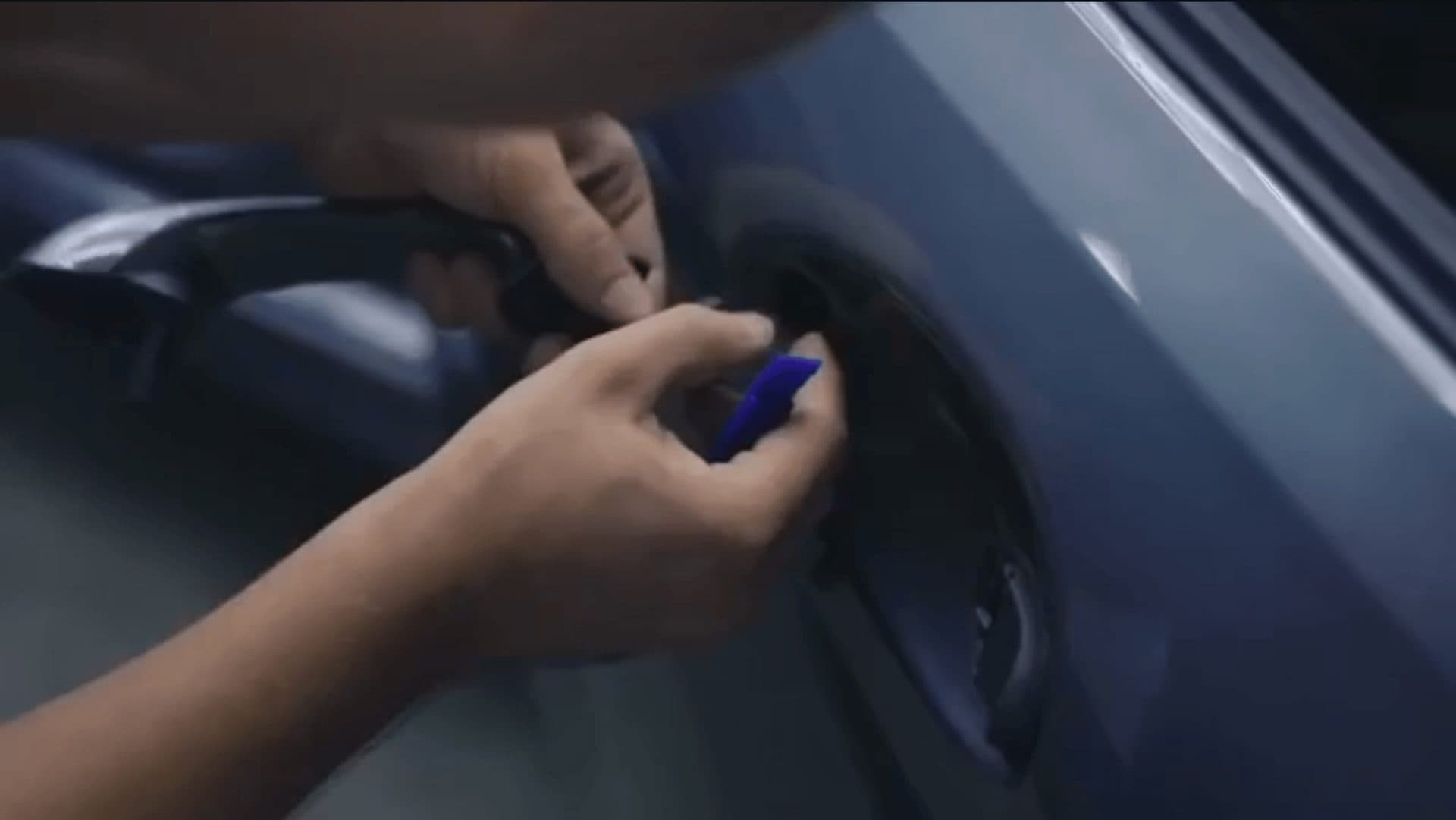
Inside the car, there is one area almost nobody protects and which gets scratched first: the piano-black console and screen surrounds. A ring or a key is enough. It is protected with film just like the exterior and can be included in the same job while the car is already in the bay.
Step 4: ceramic on the rest
The rest of the bodywork does not take stones; it takes sun, dust, salt air if the car stays near the coast and organic residue through much of the year. Ceramic coating deals with that better and costs less than covering the whole car in film.
It also goes over PPF, and that is what we recommend: it stops the protected front from behaving differently from the rest of the car when you wash it. What ceramic does not do is stop a stone, however it is advertised.
How the plan changes with the way you buy the car
- New from the dealership
- The best case: healthy clear coat and short preparation. Ideally, book the date before collecting it so it reaches the bay with few miles on it.
- Pre-registered or nearly new
- It often arrives with more wash marks than a new car because it has spent time on display and been cleaned many times. Correction carries a little more weight.
- Older used car
- Here, most of the quote is preparation rather than material. It is worth deciding how far to correct after measuring the clear coat and accepting that it will not look new.
- Used with old vinyl or film
- First it comes off, then we assess what appears underneath. Sometimes it is better than expected because it was protected; other times there are edge marks that need correction.
What you do not need on day one
If you have to choose one thing, start with the front. Stone chips are the only damage that cannot be undone afterwards.
- Waiting for factory paint to cure: it arrives cured, so there is no waiting period.
- Cover the whole car with film without first assessing use and exposed areas. Front PPF and ceramic elsewhere serve different needs, not every risk.
- Waxing it before bringing it in: wax and silicone have to be removed afterwards and get in the way.
- Polishing the whole car as standard. We correct what needs it and leave the rest untouched.
- Booking everything at once if the budget will not stretch: you can start with the front and add more later.
FAQ
When should I bring the car in?
As soon as possible. Every week on the road adds stone chips to the front that cannot be removed. Tell us the dealership handover date and we reserve a bay for those days, so the car goes straight from one to the other.
What if the car is used?
The plan is the same, but preparation carries more weight. Measuring the clear coat first is what matters: it sets how far correction can go and what result we can realistically promise.
Does a new car need paint correction?
Not always. Cleaning and preparation are decided after paint inspection; correction is proposed only where the clear coat needs it. A new car with healthy paint is not routinely polished.
What should I protect first on a limited budget?
The front with film, without question. That is where stones strike and where the damage is permanent. Ceramic on the rest can be added later, although doing it during the same visit costs less.
Can I do it in stages?
Yes. Bear in mind that every workshop visit repeats part of the preparation, so combining services in the same visit avoids paying twice for the same wash and degreasing.