Chrome delete: what it is and which cars it suits
Covering chrome trim with vinyl is one of the most requested partial jobs and one of the easiest to get wrong when the decision comes from an online photo. This is what we check first.
Reviewed by Sergio5 min read
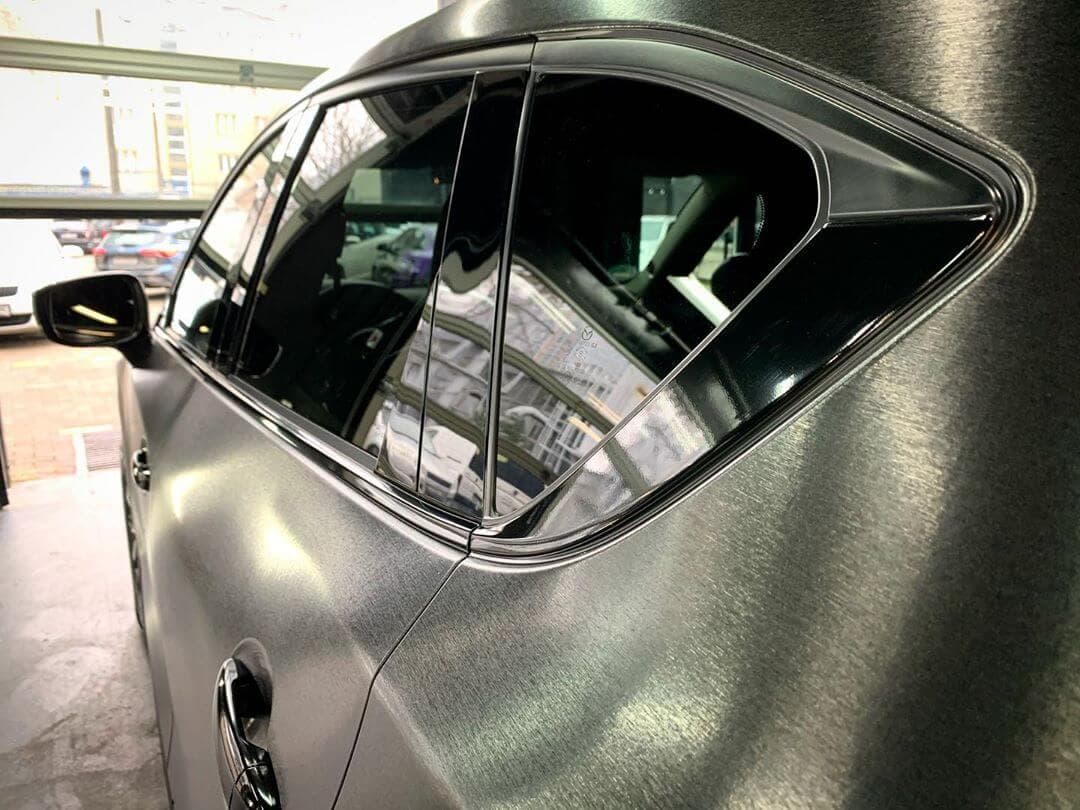
What it is exactly
A chrome delete means covering exterior chrome parts with vinyl so they stop shining. Nothing is painted or replaced: film goes over the original chrome, which stays intact underneath.
It is a partial wrap, using the same technique as a roof or bonnet, only on narrow parts full of edges. That is where the difficulty lies: not in the surface area, but in the perimeter.
Which parts are usually included
You do not have to do everything. Plenty of people cover only the window line and pillars, where the chrome has the most visual weight, and leave the grille as it is.
- Window surrounds and the trim running along the waistline.
- B- and C-pillars when they come in chrome or a mirror finish.
- Roof rails and tailgate trim.
- Grille surround and bumper trim.
- Handle trims, lettering and model badges.
- Wheel-arch and skirt trim on some models.
Which finish to choose
- Gloss black
- The most requested, because it imitates the dark trim packs offered from the factory. It works with almost any body colour and pairs best with tinted windows.
- Satin black
- It lowers the contrast and gives a more understated result. It suits light-coloured cars better, where gloss black can look too strong.
- Matte black
- This changes the character of the car most and sits least comfortably beside gloss bodywork: the difference in finish reads as a separate part rather than an integrated one.
- Other colours
- They are possible, but it is worth seeing a sample held against the car. On narrow parts, a saturated colour attracts far more attention than it appears to on a screen.
Which cars it suits, and which it does not
It works especially well on saloons and SUVs with plenty of chrome trim, where the change is noticeable without touching the body colour. It also suits dark cars, where chrome stands out through contrast and covering it makes the car read as one piece.
It works less well where chrome forms part of the design: if the trim defines a line that gives structure to the side, covering it flattens the shape. And on some classic or retro-styled models, removing the chrome takes away exactly what defines them. It is an aesthetic decision, so we prefer to see the car in front of us rather than settle it over WhatsApp.
What we check before accepting the job
When chrome arrives damaged, we tell you beforehand: film does not repair it, it disguises it from a metre away and reveals it up close.
- Whether the trim can be removed without forcing it: finishing inside is what makes it last.
- The condition of the chrome. If it is pitted, stained or lifting, the vinyl follows that texture and shows it.
- Rubber seals bonded to the trim, because they determine how far the film can reach.
- Trim with steps or more than one plane, which has to be worked in several pieces.
- Chrome-plated plastic with existing wear, where adhesion is no longer as good as it was originally.
Time, price and going back
Many chrome deletes are finished within the day. The turnaround grows when trim has to come off, and so does the quote: the price depends on the number of parts, their shape and how much they can be dismantled, not on the metres of film, which are few.
The main advantage is that it is reversible. If you tire of it or decide to sell the car, the film comes off and reveals the original chrome just as it was, usually better preserved than the rest of the exterior.
Partial car wrap →What moves the quote →Completed projects →
FAQ
Can it be done without taking anything apart?
It can, but the result is not the same. If film is cut at the edge rather than tucked inside, dirt and water have a way in and the edges eventually lift. We tell you which parts of your car can come off safely.
Does it last as long as a full wrap?
The material is the same, so the range is the same three to five years. The difference is that these are narrow parts with plenty of edges, and an edge is always the most exposed area.
Can it be removed without damaging the trim?
On healthy chrome, yes: it is removed with heat and no aggressive chemicals. If the chrome was already pitted or lifting before fitting, there is a risk and we warn you about it in writing before starting.
Can I do only the window line?
Yes, and that is the most common choice. It is where the change shows most and it can be done without touching the rest of the car.
Is it the same as painting the trim?
No. Paint is permanent and comes with its own adhesion problems on chrome-plated plastic. Vinyl can be removed whenever you like and leaves the original part underneath.
What about the logos and model lettering?
They can be covered, although they are small parts with complicated shapes. Tell us which badges your car has and we will assess which are worth wrapping and which are best left alone.